What the Owenga Ramp project means for remote and marine sites across Australia
Building a structural marine ramp is hard. Building one 800 kilometres offshore, with no concrete plant, tight tidal windows and strong ocean currents, is harder again. That was the challenge at Owenga on New Zealand's Chatham Islands, and Interbloc® precast concrete blocks were the answer.
Hunter Civil Ltd, led on site by Project Manager Jess Baker, selected Interbloc® as the primary structural solution. The ramp was completed successfully in 2024, and the project shows exactly how the system performs where conventional construction simply isn't viable.
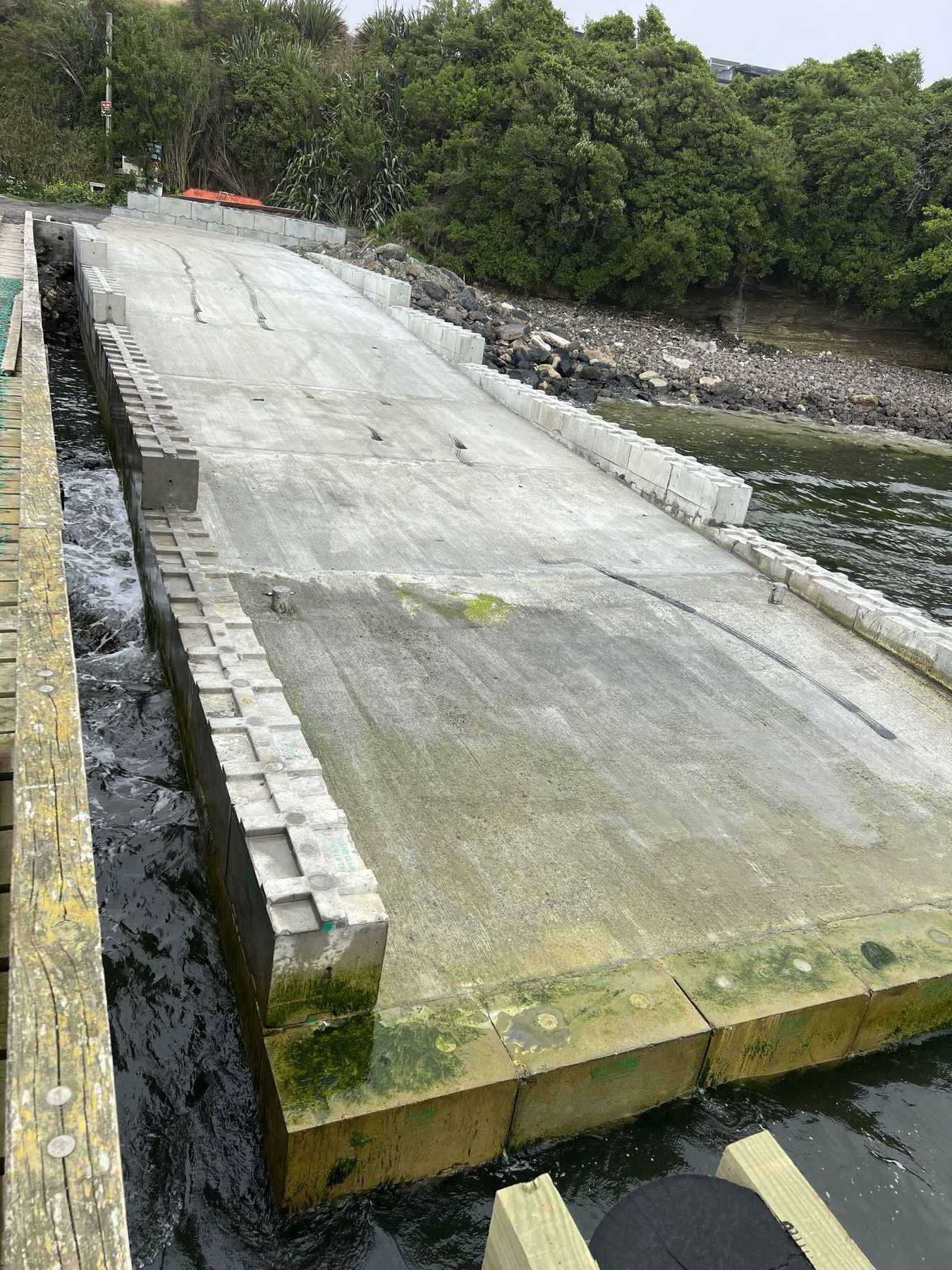
The Challenge
The site ruled out conventional construction from the outset:
- No concrete plant on the island. Every cubic metre of in-situ concrete would have been mixed by hand, making quality control for a structural marine application extremely difficult.
- No viable temporary formwork. The original design called for in-situ pours directly into the sea.
- Tight tidal windows. Placement and drilling had to be planned around tide schedules.
- Strong ocean currents. The deeper sections of the ramp demanded precise block placement.
- A long, multi-stage supply chain. All materials travelled via Timaru and then by sea, passing through multiple handling stages.
Working closely with the designer, the project team developed a revised methodology built around Interbloc® precast blocks. That single decision addressed every one of the site's key constraints.
How Interbloc® Solved It
Factory-controlled quality
Switching from in-situ concrete to precast units removed the quality risk of hand-mixed concrete on site. Every block was cast in a controlled factory environment before shipping, delivering structural consistency that site mixing could never achieve.
Built-in anchor integration
Each Interbloc® block has a pre-formed hollow core running through it. Once the blocks were in position, the team drilled through these voids directly into the bedrock and grouted anchors into the rock, locking the entire ramp firmly to the seabed. Without the pre-formed void, crews would have faced the slow, costly task of drilling through the full depth of solid concrete before reaching rock.
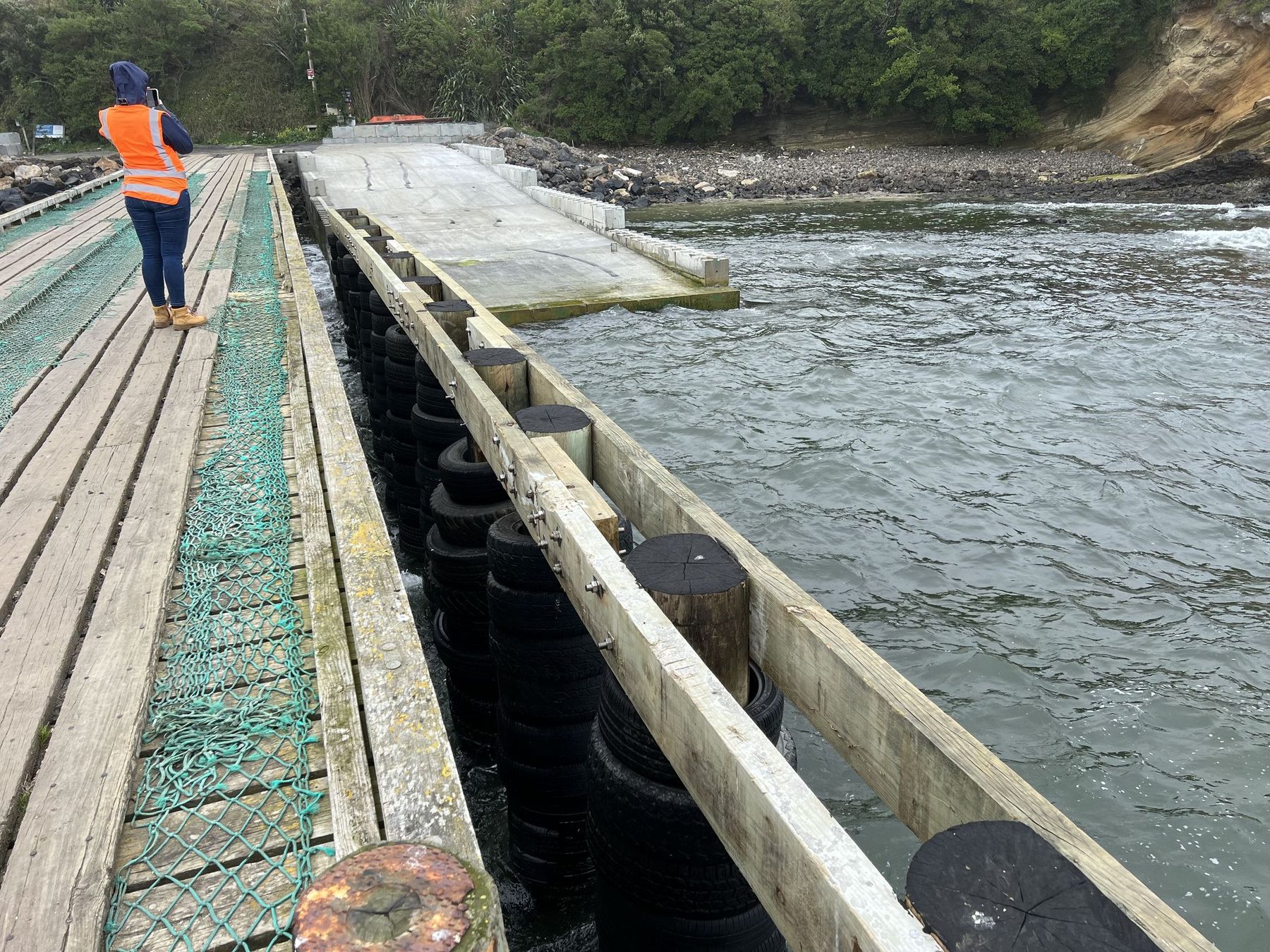
Working with the tides
Hunter Civil timed the installation to coincide with spring tides, maximising low-tide working windows, and worked flexible hours around the tidal schedule. Where ocean currents were strongest, a minor design adaptation, slightly shortening the ramp, kept the project safe without compromising structural intent.
Grouting in wet conditions
In a tidal zone, anchor holes fill with water. The team blew excess water from the drilled holes, then grouted from the bottom up so residual water was pushed out as the grout filled the void. The result was full bond without costly dewatering.
Durable through a demanding supply chain
The blocks travelled from the mainland via Timaru and then by sea, through multiple handling stages. Their durability meant every unit arrived on site in full working condition.
"Once you got the system going, the blocks locked together and were relatively easy to work with. The pre-formed holes in the blocks were essential. Without them we would have been drilling through the full block as well as the rock, which would have added significant time to the job."
Jess Baker, Project Manager, Hunter Civil Ltd
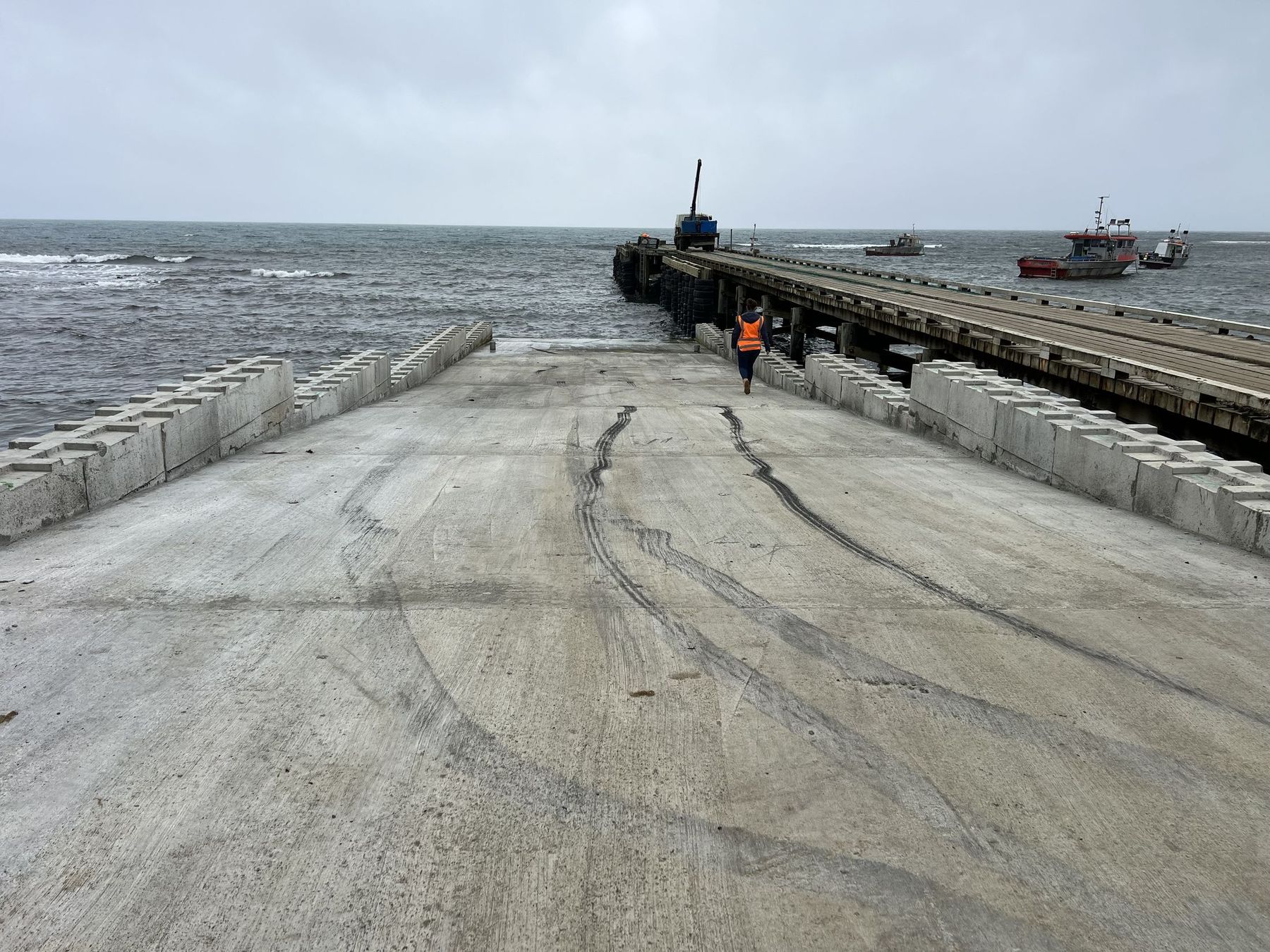
Why This Matters for Australia
Australia has more remote coastline, island communities and hard-to-reach infrastructure than almost anywhere on earth. Many sites share the same constraints as Owenga: no batching plant within reach, long barge or road-train supply chains, big tidal ranges and harsh marine conditions.
Interbloc® gives asset owners, councils, ports and contractors a proven way to build durable structures on these sites, with factory-quality concrete delivered ready to install.
Where Interbloc® Fits on Australian Sites
- Boat ramps and barge landings for remote coastal and island communities
- Seawalls and foreshore protection against erosion and storm surge
- Port, marina and jetty abutments in tidal environments
- Mine site and resource infrastructure such as haul road retaining walls, bunds and stockpile walls
- Rock-anchored retaining structures on steep or rocky ground
- Riverbank and causeway works where in-situ pours are impractical
Key Benefits
- Factory-quality concrete: no on-site batching plant needed.
- Pre-formed anchor voids: drill and grout straight into rock, not through solid concrete.
- Rapid installation: interlocking blocks go in quickly with minimal plant.
- Structural versatility: form ramps and retaining structures, backfilled with geogrid for mass retention.
- Supply chain resilience: heavy precast units withstand long, multi-stage transport.
- Tidal zone performance: proven grouting method for wet anchor holes without dewatering.
Talk to Envirocon® Australia
Planning a remote, marine or hard-to-access project? Talk to our team about how Interbloc® can simplify construction, lift quality and cut time on site.